971 private links
Trippy combines the functionality of traceroute and ping and is designed to assist with the analysis of networking issues.



Waybar is the perfect top panel program for Wayland systems like Hyprland, Sway, etc.
It offers many built-in modules and also allows the user to create custom modules to fill the panel.
We have already discussed how to configure Waybar in a previous tutorial.
📋I recommend you to go through the article first. It should make things easy to understand as you read on.
In this article, let's learn some eye-candy tricks to make your Hyprland user experience even better.
La version la plus moderne en informatique, avec les dernières technologies utilisés et les plus avancées.
OBJECTIF FINAL
- Chiffrement complet (LUKS2)
- Système de fichiers BTRFS avec sous-volumes
- Kernel Zen
- Bootloader : systemd-boot
- ZRAM
- Timeshift
- KDE Plasma (Wayland)
- Terminal Kitty + Prompt Starship + Zsh
- Navigateur Librewolf
- LLVM / Ruby

CrowdSec est un système de cybersécurité collaboratif qui utilise des mécanismes de détection et de prévention pour protéger votre infrastructure. Ce guide vous guidera à travers l'installation de CrowdSec ainsi que de son bouncer iptables sur une machine Debian 12, avec la complétion de la commande
cscli.
Je script, je script, mais parfois, j'ai un sacré trou de mémoire ... et je galère à trouver ce que je cherche sur Internet.
Comment on incrémente une variable ? Comment on fait un SI, un POUR ?
Et bien la réponse se trouve ci-dessous !

Je suis depuis quelques années fervent utilisateur de Sway, gestionnaire de fenêtre en mode tiling. J’utilisais donc naturellement ses fonctionnalités pour gérer plusieurs fenêtres de mon émulateur de terminal et les organiser à ma guise. Mais force est de constater que ce fonctionnement montrait ses limites, j’ai donc choisi d’utiliser un multiplexeur de terminal.
J’ai d’abord testé Zellij à la mode en ce moment. Il est vrai que c’est un outil rapide à prendre en main mais je n’ai pas accroché: il est pas assez personnalisable à mon goût. J’ai par contre beaucoup apprécié la configuration par défaut des raccourcis clavier.
Je me suis donc tourné vers Tmux que j’utilisais il y a maintenant quelques années. C’est un logiciel libre installable facilement sur tout une ribambelle de systèmes d’exploitation. Mais sa configuration par défaut est un peu rustique, il faut mettre les mains dans sa configuration pour l’adapter à ses besoins.
Je vais détailler certains éléments de ma configuration. Ces morceaux de configurations sont inspirés de beaucoup d’autres trouvées ci et là, que se soit via des articles de blogs, des dépôts de dotfiles, forums, etc.

Cet exemple de récupération de données vous guide à travers TestDisk étape par étape vers la récupération d'une partition manquante et la réparation d'une partition corrompue. Les traductions de ce manuel d'utilisation de TestDisk vers d'autres langues sont les bienvenues.
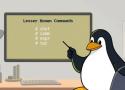
As Linux users, we often rely on our go-to commands ls, grep, awk, sed, and find – to get things done. But Linux has a treasure trove of lesser-known commands that can save time, automate tasks, and simplify workflows.
In this article, we’ll explore a collection of underrated yet powerful Linux commands that deserve more attention.
MiniOS is a reliable and user-friendly portable system with a graphical interface. These scripts build a bootable MiniOS ISO image.
File converters have always disappointed us. They're ugly, riddled with ads, and most importantly; slow. We decided to solve this problem once and for all by making an alternative that solves all those problems, and more.
All non-video files are converted completely on-device; this means that there's no delay between sending and receiving the files from a server, and we never get to snoop on the files you convert.
Video files get uploaded to our lightning-fast RTX 4000 Ada server. Your videos stay on there for an hour, or after they're converted (in the case of the input which you upload) or downloaded (in the case of the output which is to be downloaded), whichever comes first.
La semaine dernière, un de mes clients – un musicien professionnel de la région – m’a amené son PC pour une mise à jour. La machine – un modeste Lenovo ThinkCentre avec un processeur Intel Core i3 – est équipée d’un système OpenSUSE Leap, et le client souhaite migrer vers une solution LTS basée sur Rocky Linux 9.
Lors de la sauvegarde initiale des données, je me suis retrouvé confronté à quelques dysfonctionnements bizarres. J’ai eu droit à des blocages inopinés avec
rsyncetscp. J’ai démarré une session de secours pour voir, mais le problème persistait. Un coup desmartctlme confirmait que le disque SSD était apparemment en train de me lâcher. Le problème, c’est que le client ne disposait que d’une sauvegarde incomplète de ses données.
- J’ai donc extrait le disque de la machine pour le remplacer par un disque neuf.
- J’ai installé un système Rocky Linux 9 minimal dessus.
- J’ai branché le SSD défectueux à un adaptateur USB et je l’ai relié au PC.
Lynis is a battle-tested security tool for systems running Linux, macOS, or Unix-based operating system. It performs an extensive health scan of your systems to support system hardening and compliance testing. The project is open source software with the GPL license and available since 2007.

Security is essential for a GNU/Linux VPS (virtual private server) because attackers actively search for vulnerable servers to exploit.
Imagine hosting a website or some other service hosted on a VPS, and an attacker guesses the default password or exploits a known vulnerability, installs malware, and now what? Your customers’ data might be in danger, and you risk damaging your reputation.
In this post, you will explore the ways to secure a GNU/Linux VPS to ensure that you and your customers are safe.
Encrypted, Compressed, and Deduplicated Backups Using the Cloud Storage You Pick.
Supports GUI and CLI on Windows, macOS and Linux.

I’m a Linux fan, and the main reason is because of its open source nature: I have been using it for years and I gotta say a lot has changed since the early days… If you remember re-compiling the kernel in order to install an application, you know what I’m talking about… Fortunately that does not happen anymore(?), so do not freak out, not yet :).
This article will act as a looooong guide, which is goint to help you to install (and understand) Arch Linux with full disk encryption. We will review some of the concepts involved during our process, thus, we have a better picture of what we are doing.

System maintainance (and software maintainance in general) is an ongoing process that requires attention and responsibility.
So in this blog post I will summarize the key actions we can take in order to keep our arch linux installation healthy, optmized and fully working.
BTW, If you are NOT using Arch yet, I have a guide explaining how to install it from scracth and also a tiny wiki with information about daily tasks, process and guides.
Je déteste acheter du matériel informatique pour deux raisons : parce que c’est un achat imprévu causé par la défaillance prématurée de mon matériel actuel, et parce qu’il est très dur de s’assurer qu’on ne va pas acheter de la camelote.
L’acheteur aguerri ira bien entendu se renseigner en amont, mais franchement la plupart des guides ont une approche consumériste qui tiennent plus de l’unboxing que de la revue en profondeur. Ceci dit, je ne suis pas le premier à vouloir prendre la tangente, à l’image de Kris De Decker du Low-Tech Magazine qui écrivait Comment et pourquoi j’ai arrêté d’acheter de nouveaux ordinateurs portables.
Du coup j’ai décidé d’écrire mon propre guide dogmatique, plein de partis pris, mais qui aboutit à des recommandations concrètes, qui soit “actionnable” comme on dit. Alors peut-être qu’il ne vous plaira pas : n’hésitez pas à le critiquer sur votre blog, votre contribution sera un complément bienvenu à ce guide, on a besoin d’information !
Mon constat de départ, c’est que si votre budget est inférieur à 1 000 euros, vous aurez un bien meilleur ordinateur en tout point de vue en l’achetant d’occasion plutôt que neuf. Vous allez comprendre pourquoi !
sudo (abréviation de substitute user do) est une commande permettant à l'administrateur système d'accorder à certains utilisateurs (ou groupes d'utilisateurs) la possibilité de lancer une commande en tant qu'administrateur.
Voici une série de vidéos (62) consacrée à la distribution Linux Mint 22 intitulée « Pas à pas pour les débutants ».
- Linux Mint 22 - Pas à pas débutant - YouTube
- Pack débutant (partie 1) - Linux Mint 22 - Pas à pas pour débutant sur YouTube en Libre accès.pdf - pCloud
- C'est quoi Mint ?
- Possible pour vous ?
- Télécharger Cinnamon
- Vérifier avec 7Zip
- Créer la clé d'installation
- Créer une clé persistante
- Graver un DVD
- Démarrage rapide
- Edge à Firefox
- Chrome à Firefox
- Exporter thunderbird
- Export carnets d'adresses
- Export Agenda
- Ouvrir le BIOS
- Visite en Français
- Installation
- Démarrage et dualboot
- Veille contrôllée
- Écran de bienvenue
- Timeshift
- Gestionnaire de pilotes
- Gestionnaire de mise à jour
- Pare-feu
- Couleurs du Bureau
- Une mise à jour
- Paramètres du système
- Personnaliser le Bureau
- Une mise à jour du noyau
- La Logithèque
- Flatpack
- Alternativeto
- Paramètres du panneau
- Configuration Liste groupée de fenêtres
- Ajouter des Applets
- Mode d’édition du panneau (1)
- Mode d’édition du panneau (2)
- Réglage du MENU
- Applications préférées
- La corbeille
- Barre d'outils
- Ranger les éléments
- Marque pages
- Panneau latéral
- Menus contextuels
- Imprimante et Scanner
- Informations système
- la suite LibreOffice (une petite erreur à corriger)
- Installer les polices Microsoft sur Linux
- Capture d'écran et Flameshot
- PDF Visionneur de document ou Okular
- La Télévision avec FreetuxTV
- Thunderbird
- Carnets d’adresses
- Agenda
- Paramètres et paramètres des comptes
- Injecter le profil de Firefox de Windows dans Linux
- Sauvegarde des données avec Grsync
- Gparted renommer le disque de sauvegarde
- Vider le cache de Linux avec le Terminal
- Restaurer avec Timeshift
- Démarrage - enlever ou mettre un mot de passe
- Petit bilan et conseils

The process is pretty much the same as regular Arch install. You just choose a few additional settings. Let me show the steps in details.